Facebook, Idan's Blog
From Facebook – Idan and his Magna Tiles
by Admin • • 0 Comments
Facebook, Idan's Blog
From Facebook – Happy New Years
by Admin • • 0 Comments
Idan's Blog
The Return to Duke
by Amanda • • 10 Comments
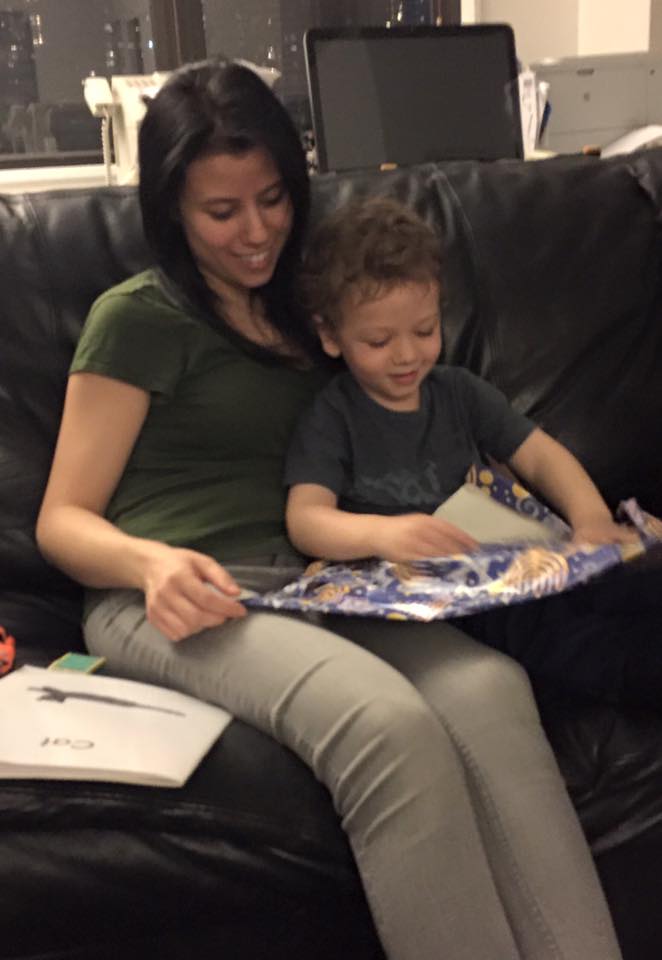 This week we are celebrating the Jewish holiday of Chanukah, which celebrates (among other things) a miracle: After destruction of the temple, the Jews used the last remaining oil they had left to light the menorah, with the flame rising from the menorah in the midst of ruins as a symbol of their resilience despite great hardship and against all odds. They believed the oil would last only one day, but it lasted eight days. To this day, Jews light candles on menorahs around the world for eight days to commemorate this miracle of survival, resilience, and another seven days of light.
On the 8th and last day of Chanukah, by coincidence, we are headed to Duke to test whether Idan’s remaining donor t-cells, which are so few in number but are nonetheless hanging on, are, like the oil, sufficient. This would be a miracle indeed.
As we mentioned in our last update in September, we are working with our medical team to plan Idan’s second transplant. As time goes by, it looks more and more likely that we will be heading back to Seattle this Spring for transplant. Idan has been doing great, growing and thriving and we have been able to keep him healthy with his weekly infusions of antibodies. He receives home-school services from the New York State Board of Education, and has been learning to read quite impressively for a 3 yr old (we kid you not). So we are once again headed towards transplant with a healthy, active child, and we are once again gearing up for all the challenges that lie ahead.
Before we decide whether to move forward with a second transplant, however, we need to first conclusively determine that it is absolutely necessary. While he has lost almost all his donor graft, there is around 8-10% of the donor’s t-cells still showing up in his chimerism tests. Although in a perfect world, 10% donor t-cells could in theory be sufficient to provide an individual with a functioning immune system, it appears that the donor t-cells in Idan’s graft are not binding to the B-cells, which is necessary in order to create an antibody response. For this reason, we assume that a 2nd transplant is imminent. However, the tests that have been run so far are not 100% conclusive, and, before going into a second bone marrow transplant, which is without a doubt a life-threatening procedure, we and our team of doctors feel that we need to be absolutely sure that the remaining donor cells lingering in Idan are in fact insufficient to provide Idan with a functioning immune system.
It is not easy to determine whether Idan can make antibodies with the small amount of donor cells left. He receives weekly infusions of subcutaneous immunoglobulins (SCIG), which provides him with a high level of antibodies. One way to test if he can create antibodies is to give him a vaccine (any of those childhood vaccines we all get). However, because of the constant infusion of antibodies through SCIG, he has a full repertoire of antibodies for almost any vaccine, meaning we would not be able to determine whether he was responding to the vaccine or whether the antibody is from the SCIG.
There is one test that is only available in the United States in Seattle and at Duke called the bacteriophage φX174 or Phage. Essentially we would be giving Idan a *fake* vaccine (through an IV) that contains a small amount of a virus that is used to fight bacterial infections. This is not a virus that people are exposed to, and it is not part of vaccinations anyone gets, so antibodies to this virus would not exist in the SCIG he receives weekly. If Idan can make a response to this vaccine, it will show up as distinct immunoglobulin (antibodies) for this phage and can be measured.
After much research and debate we decided to head down to Duke to do this test. It is a short 24 hour visit, and we will send blood samples back to Duke over the next 6 weeks. Then we will head to Duke again in late January for a 2nd dose and repeat blood tests back in NYC. Sometime in March, Duke will send all the samples to Seattle’s immunology lab for testing and we should get results right before the tentative date of the 2nd planned transplant.
Two and a half years after our first expedition to Duke to find a cure for Idan, we are headed back to Duke this Sunday to test if Idan might perhaps be cured. Based on all lab tests it is very unlikely that Idan will make a response to this vaccine. But, if by some miracle his small percentage of donor T-cells can make a response, this might mean that we can postpone 2nd transplant and see if his donor cells can provide him with enough immune function on its own.
We will begin this test on the 8th day of Chanukah, a holiday commemorating that miracle long ago whereby a very small amount of substance that should have lasted only for 1 day lit the Menorah in the temple for 8 full days. Let’s hope that Idan’s small amount of donor cells can pull off the same kind of miracle.
Idan's Blog
Smile – Ten Years Brain Tumor Free
by Akiva • • 2 Comments
“Based on the rate of growth and the location of your tumor you have around two years to live.” That was the sad prediction I heard from dozens of physicians in the summer of 2005. From New York to Boston to Los Angeles and Jerusalem, everyone around the world we consulted had a different approach, but they all agreed: The brain tumor was “inoperable.” I was twenty five years old and one year away from graduating Columbia University. I was way too young to die.
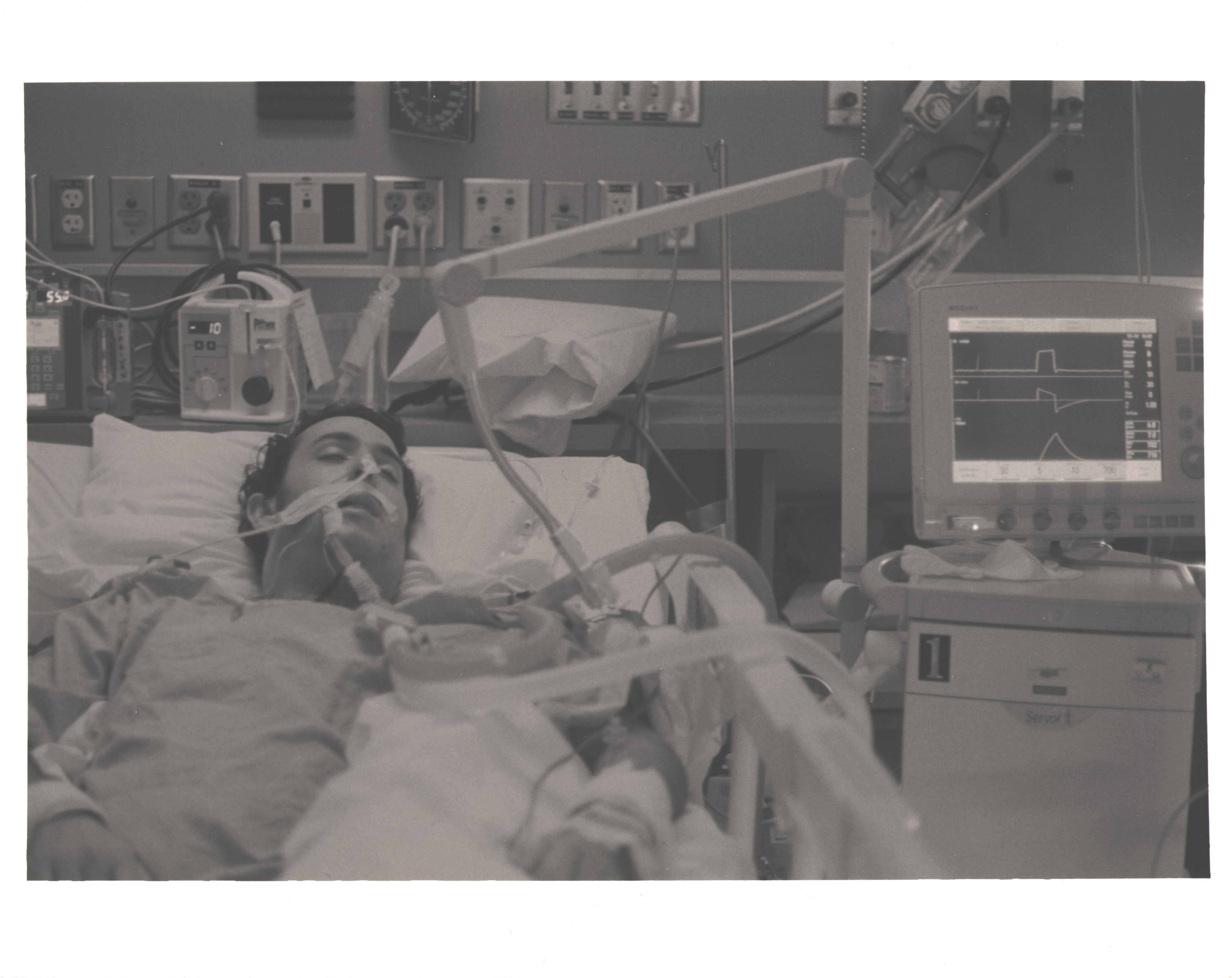 I am still here. Ten years later, I am alive and well and tumor free and the only prediction that came true was the one given by Dr. Robert Spetzler in Phoenix, Arizona. With a big smile on his face he said: “I am 95% confident I can get your whole tumor out, and leave you in not much worse condition than you are now.” At first, it seemed his proclamation might have been an overstatement. On November 8, 2005, Dr. Spetzler successfully remove my whole tumor. While my family was assured the next day that the tumor was all out, and I would be fine, at the time it did not look like it. I was in an induced coma, intubated and had tubes sticking in and out all over my body. I only woke up four days later, when they were finally able to extubate me. I could not feel or move the left side of my body. I could not talk, walk, swallow or do much of anything. The right side of my face was paralyzed and numb, and I could not smile or even hold water in my mouth without it dripping out. Like a newborn baby, I was cradled and tended to by my family and an amazing team of nurses at St. Joseph’s Hospital in Phoenix. Every day Dr. Spetzler came by during rounds, looked at my broken and weak body, and proclaimed, “he is doing great!” Everything will be okay. Eleven days later, I was transferred by plane and wheelchair to NYC to Rusk Rehabilitation Center for what we were told would be a very slow and long process of rehab. There, I learned to walk, talk, swallow and was able to be released to outpatient in three weeks. I continued my rehabilitation out-patient while I resumed classes at Columbia. The right side of my face was paralyzed, and numb, and I had set a personal goal to smile once again.
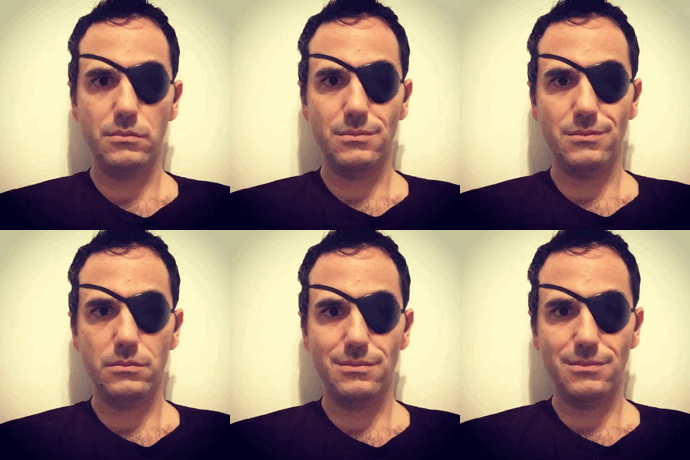
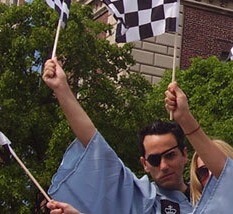 Two years later, in November 2007, I had my diploma from Columbia and went on to obtain an MPH at the Mailman School of Public Health. I was dating the love of my life and was doing great, physically and professionally. But I still could not smile. Sure, I could mostly drink without spilling water out of the side of my mouth, and I had even perfected a method of blowing up balloons. But I had not reached my goal. The cranial nerve that controlled my face was cut or damaged and was not coming back. The doctors had told me over and over again: most deficit improvement is seen in the first 3-6 months. After that, some might still get better in the first 2 years post surgery. But after those two years, things will not improve or come back. My fate was sealed. I may have been reborn as the superhero, iPatchman, but I was destined to always be defeated by DC Comics’ Two-Face.
Two years later, November 2009, marked some of the happiest days of my life. I just married my true love. I had a dream job in healthcare consulting and life was good. I had outlived all predictions and was tumor free for four years. And despite the utter joy, I could not fully smile. I had perfected the Zoolander Blue Steel look for photos. My wife, Amanda had fallen in love with my half grin and I could not complain. Most people in my situation did not live to tell the tale, and I was complaining about a smile? I continued to refuse offers to surgically stitch my face in a permanent Joker grin and continued my own physical therapy and exercise to keep the little muscle tone I had on my right side of my face.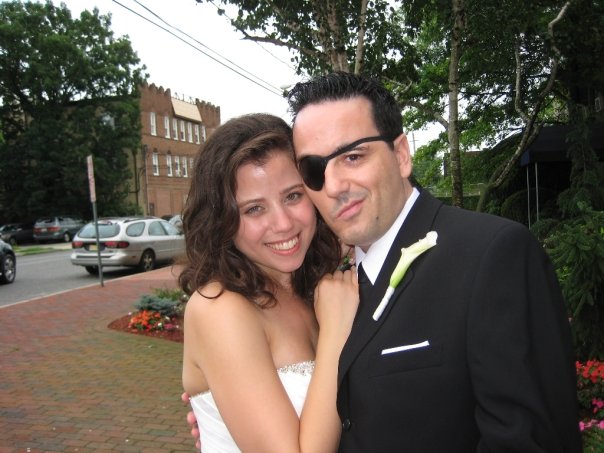
Two years later, in November 2011, now six years post-brain surgery, I sat at Nonna’s Italian Restaurant on the Upper West Side for my birthday dinner with Amanda. She handed me my birthday present. A little red box with yellow teddy bears. Inside, little baby booties and a handwritten note on tissue paper, with the message “To the greatest love we will ever know.” She was informing me that she was expecting. We were going to have a baby in eight months. Inside, my joy was endless, and yet I still could not smile. Just my regular half grin in response to the best news anyone can get.
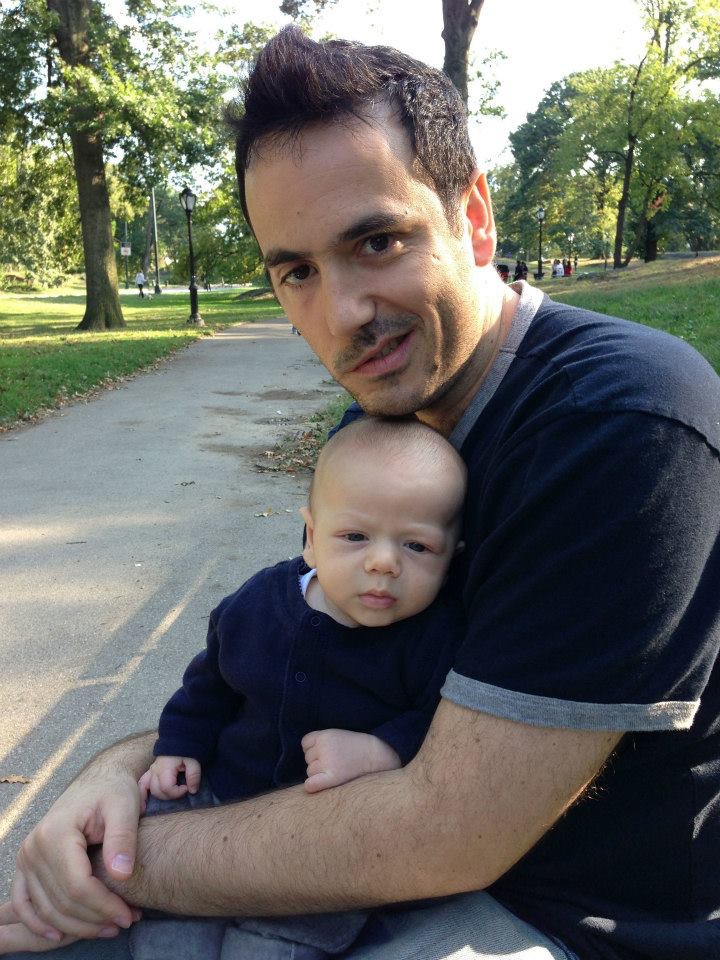
Two years later, by November 2013, we had experienced both extremes of any parents’ emotional spectrum. From the new happiest day of my life, the day my son Idan was born, to the scariest and saddest day of our life, the day he was intubated for PCP pneumonia. Even if I wanted to smile, I could not. We were filled of hope now, and longing for a normal life again. Just a few weeks after Idan’s bone marrow transplant, I celebrated my 8th year tumor free. I was full of hope that by my ten-year anniversary Idan would be cured and everything will be back to normal. I stopped believing that I would ever smile fully again, even if I wanted to.
Today, two years later, Idan is not cured. We are heading towards a second bone marrow transplant in the spring, and life might never be normal. But hope is still part of every drop of my being. The same unrelenting perseverance that allowed me to live through an inoperable brain surgery has kept my son alive and well and found him the best care he could receive. My education, life experience and optimism serve me now as the president and co-founder of the Hyper IgM Foundation. Our mission is not only to cure Idan, but to work for a cure for all families and children living with Hyper IgM. I know this can be achieved. I know happiness is possible. I know normality is a state of mind. I know all this because I spend the day smiling. A full smile. I spend the day smiling when Idan wakes up in the morning with a million questions as if the night was just a fleeting moment. I spend the day smiling when I see Idan play with his little cousin and they both laugh uncontrollably. And I spend the day smiling when Idan is solving puzzles way too advanced for his age or building lego sets made for six-year olds.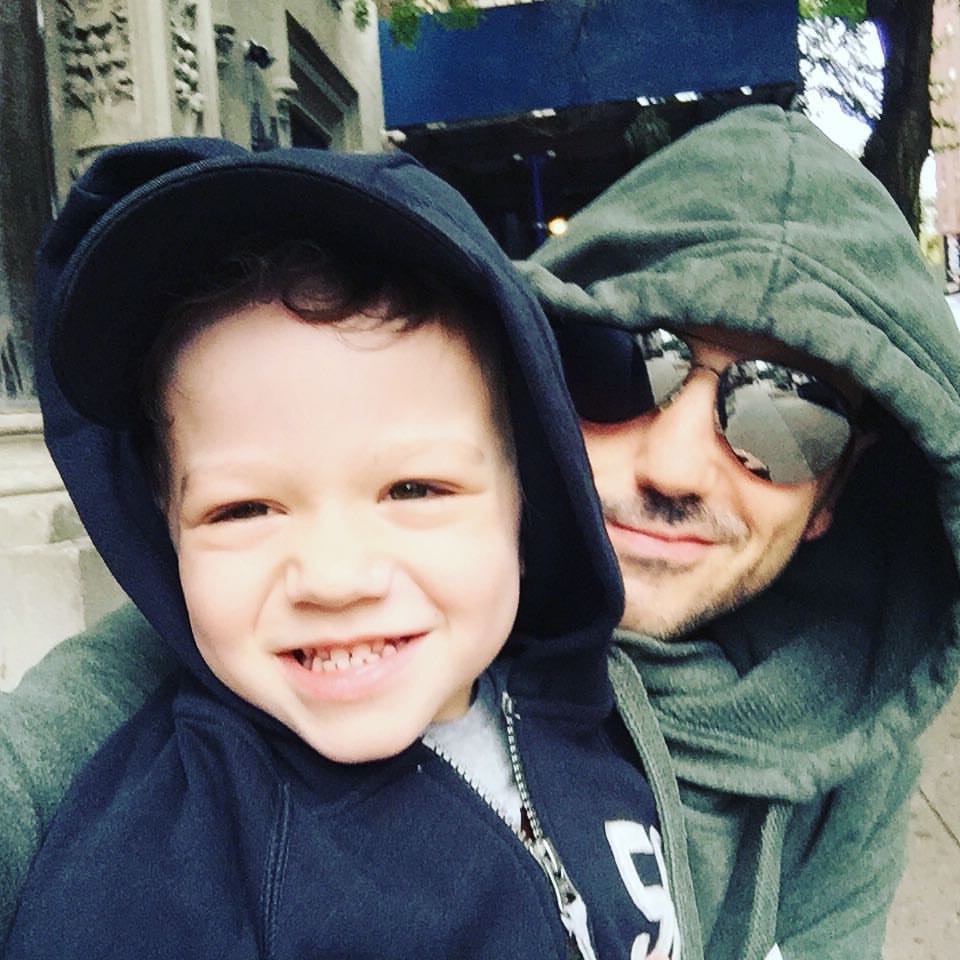
Sometime, over the last two years of trying to achieve normality in a post transplant world, my smile just appeared. Despite all medical predictions of how or when deficits can recover, I am able to smile with both sides of my face now. Ten years, brain tumor free, and I am smiling every morning when I wake up next to Amanda and when Idan calls us into his room. If my smile can appear again ten years after it was removed along with a tumor that had my name on it, I know that anything is possible. I invite you all to help me make that which is impossible a reality. Help me bring a smile to the families across the world dealing with Hyper IgM Syndrome.
Donate today to my ten year brain-tumor-free fundraising page!
Facebook, Idan's Blog
Idan’s Two Year Transplantaversary
by Admin • • 0 Comments
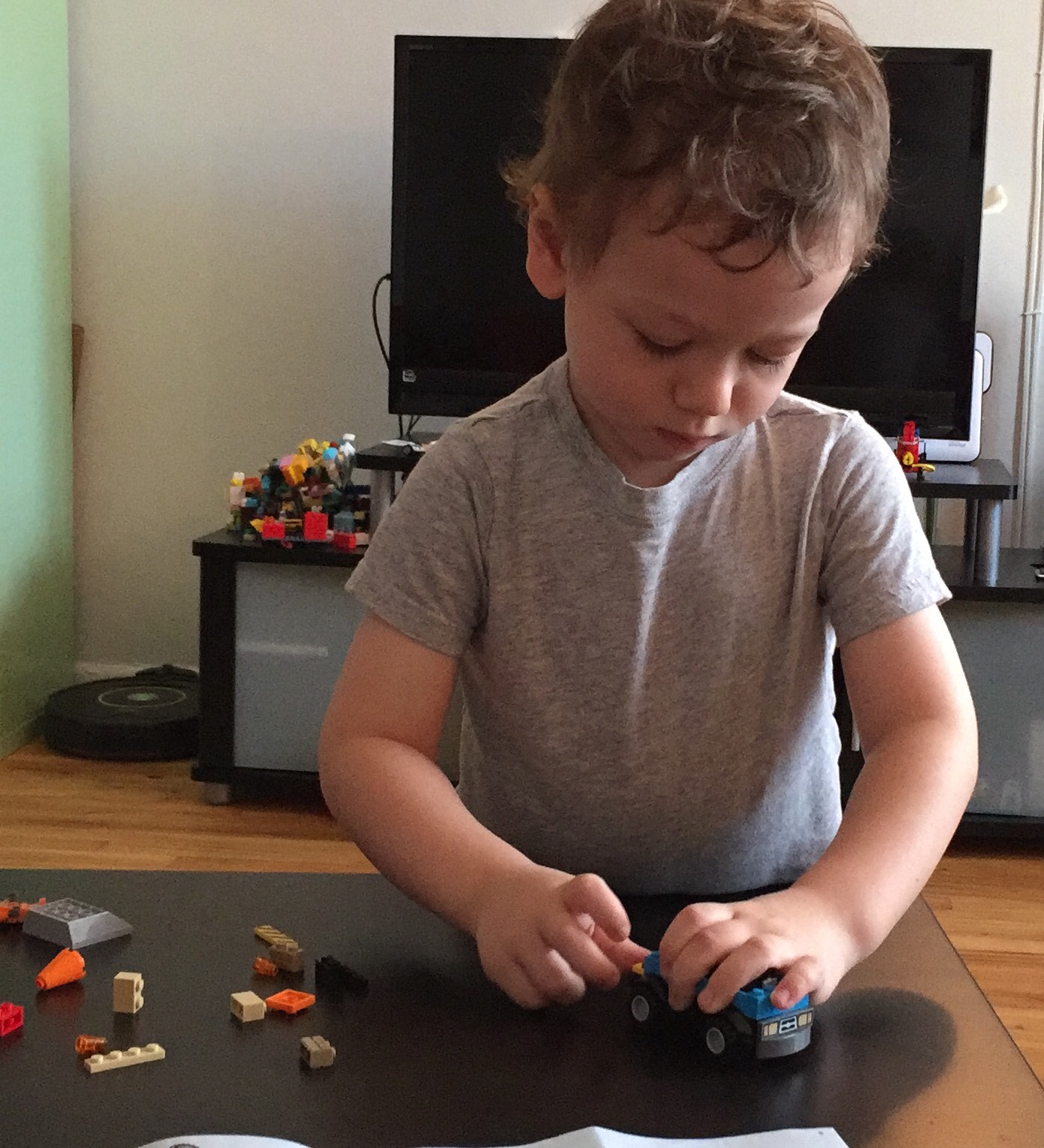 Today is Idan’s two year transplant anniversary, or Transplantaversary. We set out 2 years ago to cure Idan from Hyper IgM, and that cure still remains elusive. Still, we count our blessings to have such a smart, happy and active three year old, and we have been very lucky that he has stayed healthy during the last two years. During this time, our mission to cure Idan has grown larger than even ourselves, as we founded the Hyper IgM Foundation aimed at curing all Hyper IgM patients. We are determined to make sure that all Hyper IgM children can look forward to long and healthy lives. In Hebrew, life is ‘Chai’, and its numerical value is 18. In honor of Idan’s Transplantaversary, we call on you to join us in supporting our mission with a donation of Chai, “life,” to the foundation:http://www.hyperigm.org/support-the-foundation/
Today is Idan's two year transplant anniversary, or Transplantaversary. We set out 2 years ago to cure Idan from Hyper…
Posted by Help Fight for Idan on Friday, October 23, 2015
Idan's Blog
Our latest email update
by Admin • • 0 Comments
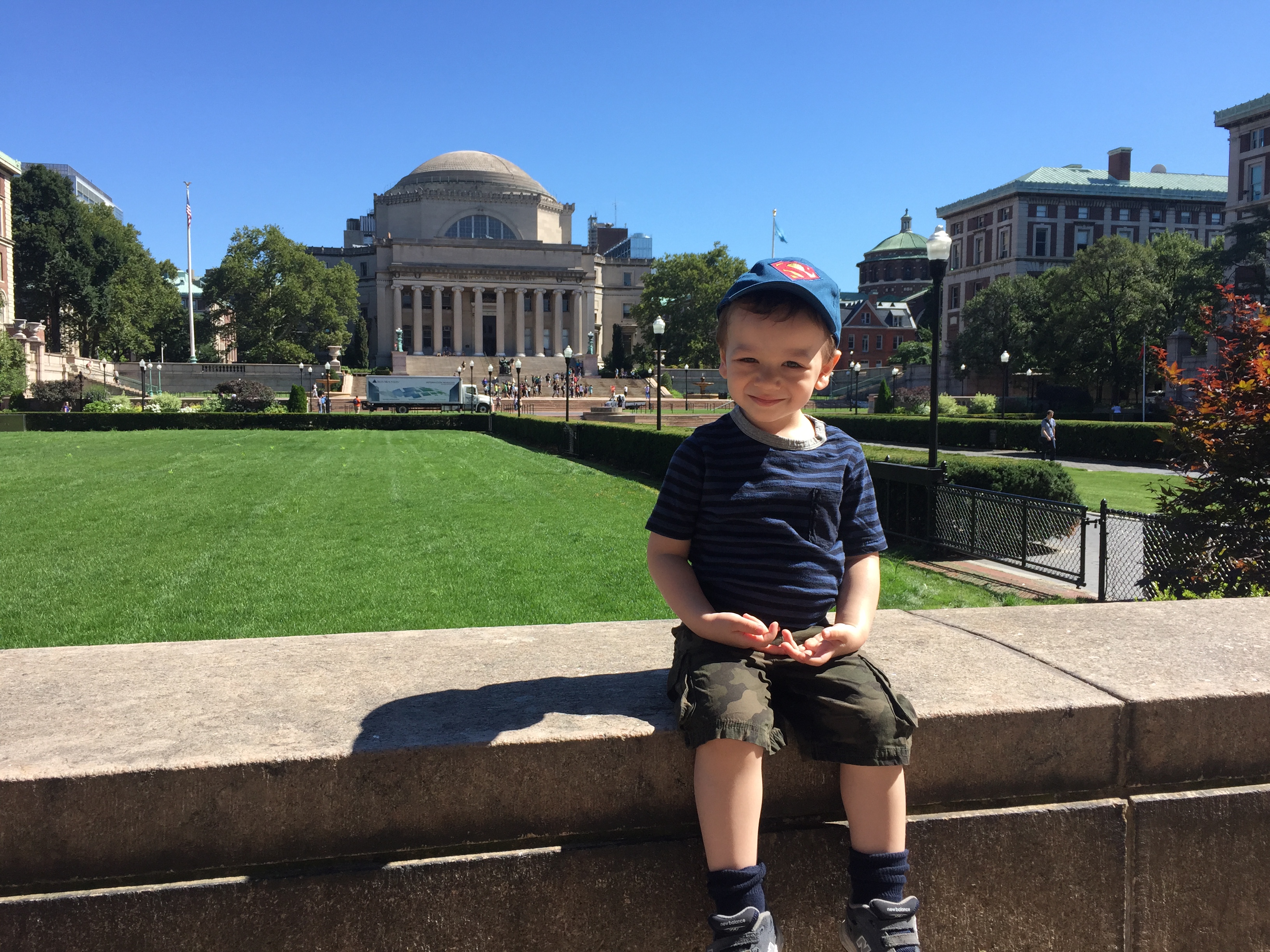 Hi everyone,
It’s been too long since the last time we sent an email out to Idan’s Army. Hopefully you’ve been following the blog updates on IdanMyHero.com, latest news, and our Facebook page, Help Fight for Idan. Regardless, we wanted to check in, give you the latest update and plans for the coming years, and introduce you to Hyper IgM Foundation, Inc., which we recently formed to help others like Idan.
First and foremost, Idan turned 3 on July 20th and is doing very well for a child with Hyper IgM Syndrome. As you may know, Idan’s first bone marrow transplant (BMT) failed, and we have been mourning the loss of his donor’s graft over the last year. The good news, however, is that Idan is a strong and vibrant little man, and his doctors say he is physically ready for another transplant once we give them the go-ahead. Emotionally, it is hard to believe that the three of us will ever be ready to go through that long ordeal again, but the fact that we are familiar with the process will hopefully help us get through the next BMT. In the meantime, we are working with the doctors to coordinate timing – be it this year or next, Idan’s chances of surviving and being cured are significantly higher if the transplant happens before the age of 5.
Idan remains in moderate isolation (which will intensify during flu season, which starts this month, believe it or not). He has permission to see healthy kids and adults and the ability go on some “adventures” from time to time. He has been tolerating his weekly subcutaneous IgG replacement therapy infusions extraordinarily well, and, true to form, he has thrived, and is a remarkably smart and happy child. Since he cannot attend pre-school he will start receiving home-school services this September. Idan is very excited to start “school” and is eager to learn and advance.
Our lives too have been changed by transplant and we have spent much of our time over the past two years becoming empowered patients and advocates for Hyper IgM and Immune Deficiencies within the medical community. Amanda’s experience has led her to focus her legal career on healthcare and nonprofit law, transitioning out of litigation and into the healthcare practice at her firm Sheppard Mullin Richter & Hamilton LLP.
The knowledge we have gained and the connections we have made in the medical world and among the global Hyper IgM community have inspired us to form a not-for-profit corporation called Hyper IgM Foundation, Inc. Our mission is to improve the treatment, quality of life and the long-term outlook for children and adults living with Hyper IgM through research, support, education, and advocacy. We are in touch with some of the leading labs across the country that are on the forefront of gene editing for those genetic mutations that cause Hyper IgM and are seeing some early but very promising results. Much of our focus, therefore, will be to support and advocate for research that will further advance these exciting new developments as they hold the promise of a cure for children like Idan without many of the attendant complications of the bone marrow transplant.
In addition, our journey has introduced us to dozens of other families living with Hyper IgM, and parents of children just like Idan, discovering this life-threatening disease much like we did – standing by their child’s ventilator in an ICU – who have found our blog and seek our advice. All the research, consultations, and connections we’ve made since Idan was diagnosed are now parlaying into a wealth of knowledge and expertise that we can use to help support and educate these families and their doctors as they navigate the quagmire that is Hyper IgM. In that regard, we have established a scientific advisory board that is going to help guide us in developing best practices, treatment plans, and resources for the relevant patient and medical communities.
We invite you to visit the Hyper IgM Foundation’s website, and encourage you to share our story and vision, spread the word and help more children like Idan.
All our best, and, as always, thank you for being part of Idan’s Army.
Akiva & Amanda and Idan
In The News
Idan in The Guardian
by Admin • • 0 Comments
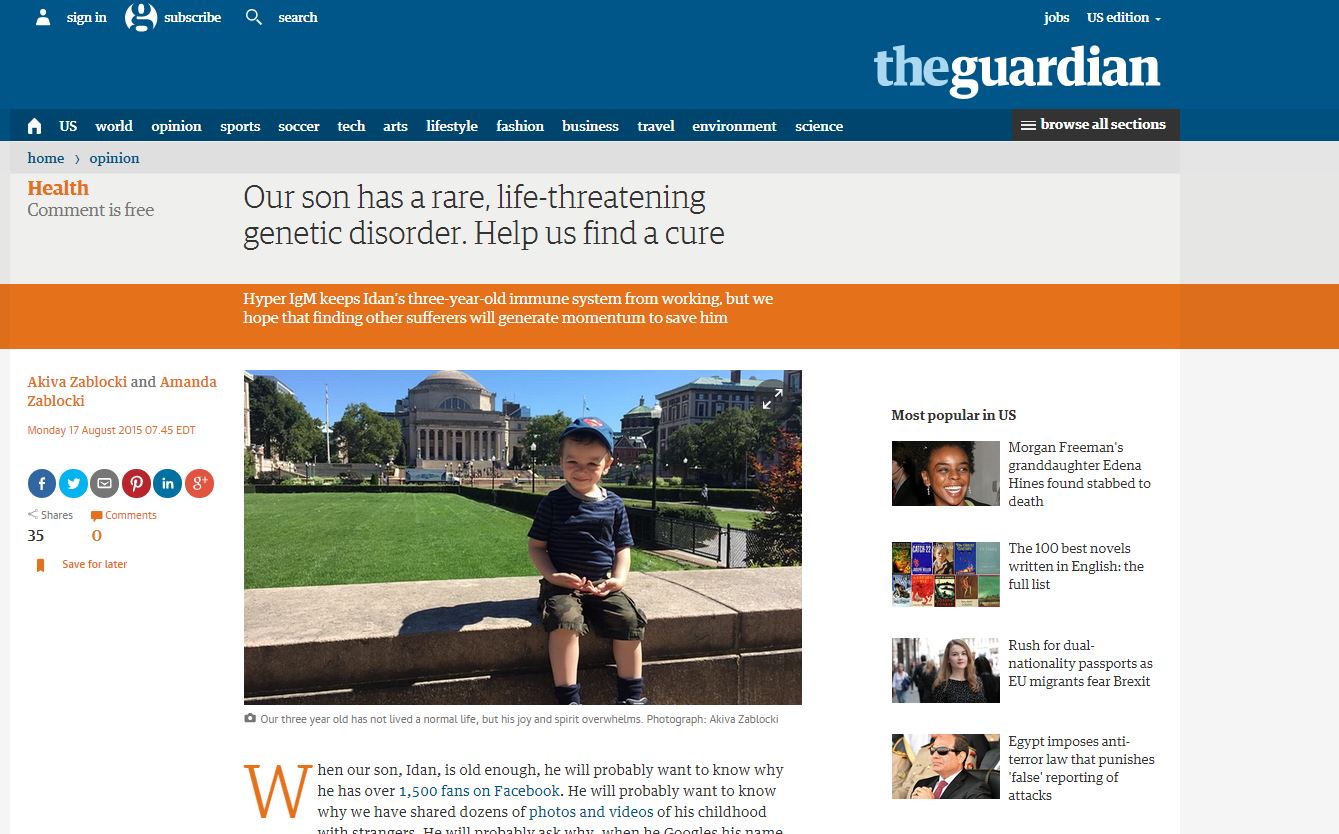 On August 17th Amanda and I published the following op-ed to the Guardian telling Idan’s story and calling for people to get involved with the Hyper IgM Foundation:
“When our son, Idan, is old enough, he will probably want to know why he has over 1,500 fans on Facebook. He will probably want to know why we have shared dozens of photos and videos of his childhood with strangers. He will probably ask why, when he Googles his name, dozens of news articles come up telling his story. We will tell him that, at first, we shared his story to help him and us deal with the challenges we faced, but later, we shared his story to inspire others who might be facing similar challenges. I hope he understands, and I hope he forgives us for giving him a digital footprint at such a young age.
At eight months old, Idan was rushed to the emergency room by ambulance with a very low oxygen rate and rapid breathing. A healthy and strong baby boy until that point, he spent the next three weeks in the pediatric intensive care unit, two of those on a ventilator, clinging to life. Idan had pneumocystis jiroveci pneumonia, a rare type of pneumonia only a child with a severely compromised immune system could contract. Idan’s pneumonia led doctors to diagnose him with a life-threatening genetic disorder called X-Linked Hyper IgM Syndrome, orHyper IgM for short. It keeps Idan from being able to produce any antibodies of his own to fight off infection. It meant that without weekly infusions of antibodies and antibiotics prophylaxis, his chances of long-term survival were significantly diminished. A bone marrow transplant was the only known cure.
It had been the hardest three weeks of our lives, and we returned home tired and hopeless. The first thing that greeted us back home was a denial letter from our insurance plan for the antibody infusions, the only thing keeping our son alive. It would be the first of many medical and insurance-related setbacks that we would face over the next couple of years as we fought for our son’s cure. But it set the tone of our struggle and inspired our first battle cry. We decided to share Idan’s story with the world in hopes of not only raising funds to help pay for the medical expenses that were piling up but also to find others like Idan and to learn from them.
In the two and a half years since, Idan has amassed a medical record longer than most nursing home patients. He has endured thousands of needle pokes and dozens of invasive procedures and tests. He has had half a dozen surgeries and one failed bone marrow transplant.
Yet nothing seems to have phased him or slowed him down. He was known at Seattle Children’s Hospital, where he got his transplant, as the happiest baby they had seen during the procedure. His favorite part was entertaining the team of 14 doctors and nurses who came in during his morning rounds. He learned his ABCs and 123’s during the long hospital stays before most kids say their first word. And he has grown and thrived despite having a severely compromised immune system and many restrictions on human interaction.
But we want more than that for Idan; we want a cure. We recently formed theHyper IgM Foundation, a patient advocacy organization that will provide support and resources to families living with Hyper IgM, educate the medical community regarding diagnosis and treatment and provide funds to support critical research and advancements in gene editing, bone marrow transplant and other known and unknown therapies that could help Idan and the hundreds of others in the world grappling with Hyper IgM.
Our family has been put through trial after trial, each more trying than the last. But we’ve learned so much, and through the wreckage, we have found something new and beautiful beyond measure: hope. It’s hard not to feel hope in the company of the most charming, loving and bright child a parent can hope for. We are full of pride, and we feel utter joy in his presence. But we know that, without parents like us – empowered, informed and engaged – children with his disease do not stand a chance. Informed parents join their child’s medical team and must constantly make tough decisions. Bone marrow transplants are long and very risky procedures. Even when a match is found, 15-20% might not survive the first year, and many more have long-lasting effects from the chemotherapy and graft v host disease. Parents must be vigilant with the dozens of medications and infusions their children need post transplant as well as with strict isolation procedures.
For all those parents who have the means and the desire to advocate for more research into a cure for a rare disease like Hyper IgM, we encourage you to do so. Patient advocacy groups are vital to medical advancements, are extraordinarily effective tools and support systems and, importantly, can provide a meaningful path to a cure.”
Idan's Blog
A Three Year Journey
by Admin • • 0 Comments
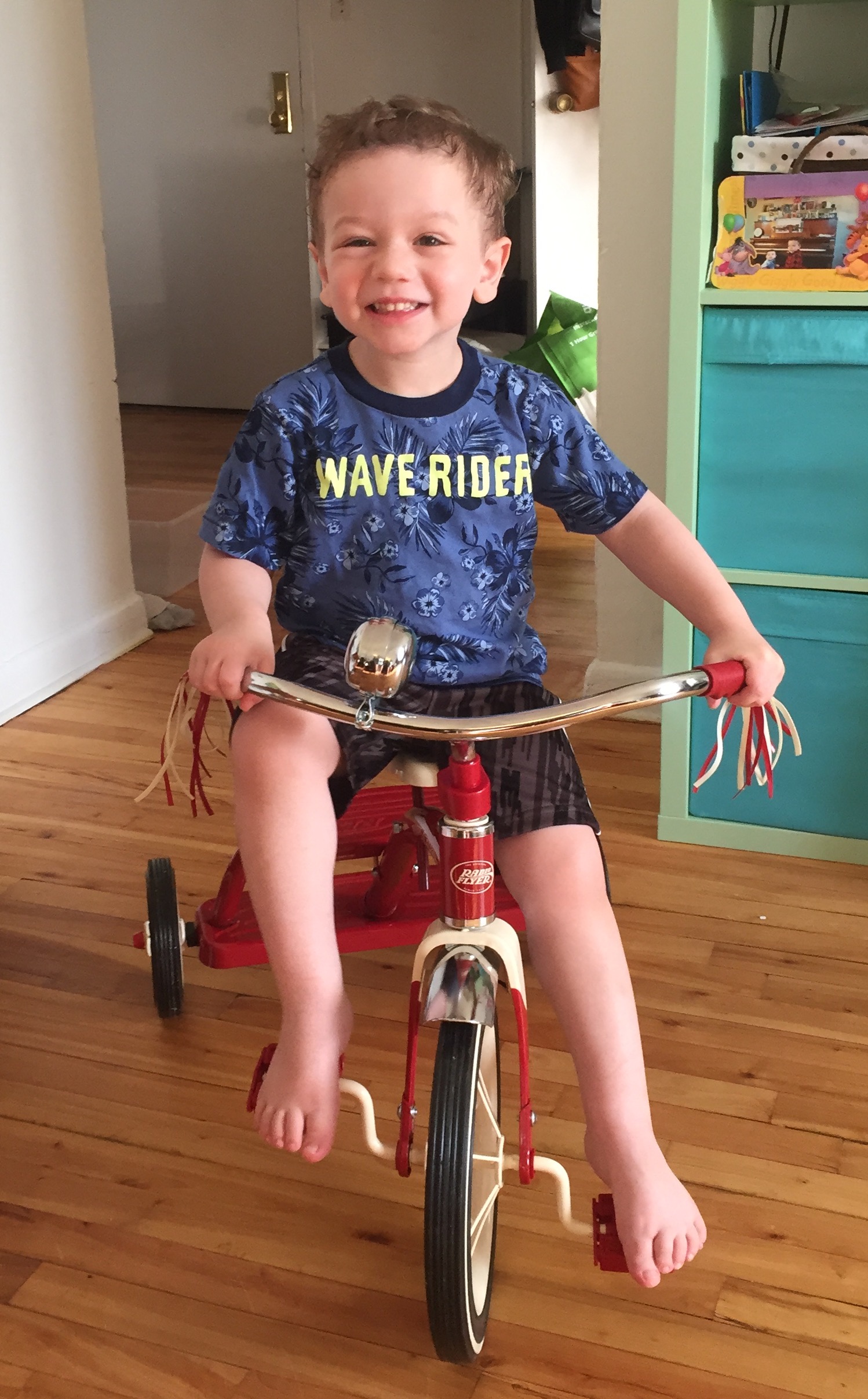
Idan’s New Ride!
Today Idan turns three, which is a big milestone in every toddler’s life, and Idan is no exception. We are thankful that this past year Idan has kept healthy, and, despite the loss of his graft, we are happy with how well he has been doing and dealing with Hyper IgM. As mentioned many times, our journey to a cure is still at its beginning, but we have learned to enjoy and cherish the small moments of joy along the way, and the small wins that Idan has earned.
This summer we have decided to be more adventurous. With flu season over, and many less cold viruses around we have taken more risks and found ways to allow Idan to get out more and explore. The truth is that most of this is because Idan has turned out to be an extremely conscientious and well behaved kid who has learned to navigate the outside like a germ-busting pro. There are not many kids under three who have learned not to touch their face, not to touch surfaces and to ask for Purel and antibacterial wipes after a fall before asking for the needed healing kiss. You can see the clip below of Idan’s thought out approach to sitting on a stone in Central Park, a method that would put even the best of OCD germaphobes to shame.
This has allowed us to enjoy the summer more and even journey out of state for one of the more memorable experiences Idan has had so far. In late June, we travelled down to New Orleans to attend our second Immune Deficiency Foundation National Conference. We were lucky enough to have Idan’s aunt, uncle and cousin join us to entertain Idan during the long days Amanda and I spent attending sessions and meeting with experts. Idan is such a good traveler he was even excited to receive his weekly infusions of IgG’s in a new setting while playing with the swag he got from the pharmaceutical companies that make immunoglobulin. After three days of swag collecting with his uncle and waking up to his cousin’s knocks on our door, Idan was ready to move into the Hyatt and did not want to return to New York. He has been asking to go back to New Orleans ever since.
For us this conference was a wealth of information and filled with important meetings with some of the biggest names in Immunology. As readers of this blog might recall, it was at this conference two years ago in Baltimore that we met with Dr. Torgerson from Seattle and learned for the first time about their transplant protocols and started entertaining the idea of traveling out there for transplant. This year we returned to the conference and had a chance to sit down with many of the experts we had consulted with two years ago and update them on Idan, and hear about the latest data and studies (soon-to-be-published) on Hyper IgM. No longer are Amanda and I newbies to the immune deficiency world seeking out any information we can find. This time, we returned as patient experts seeking to influence and inspire these experts to bring more focus to research on Hyper IgM and our patient population. 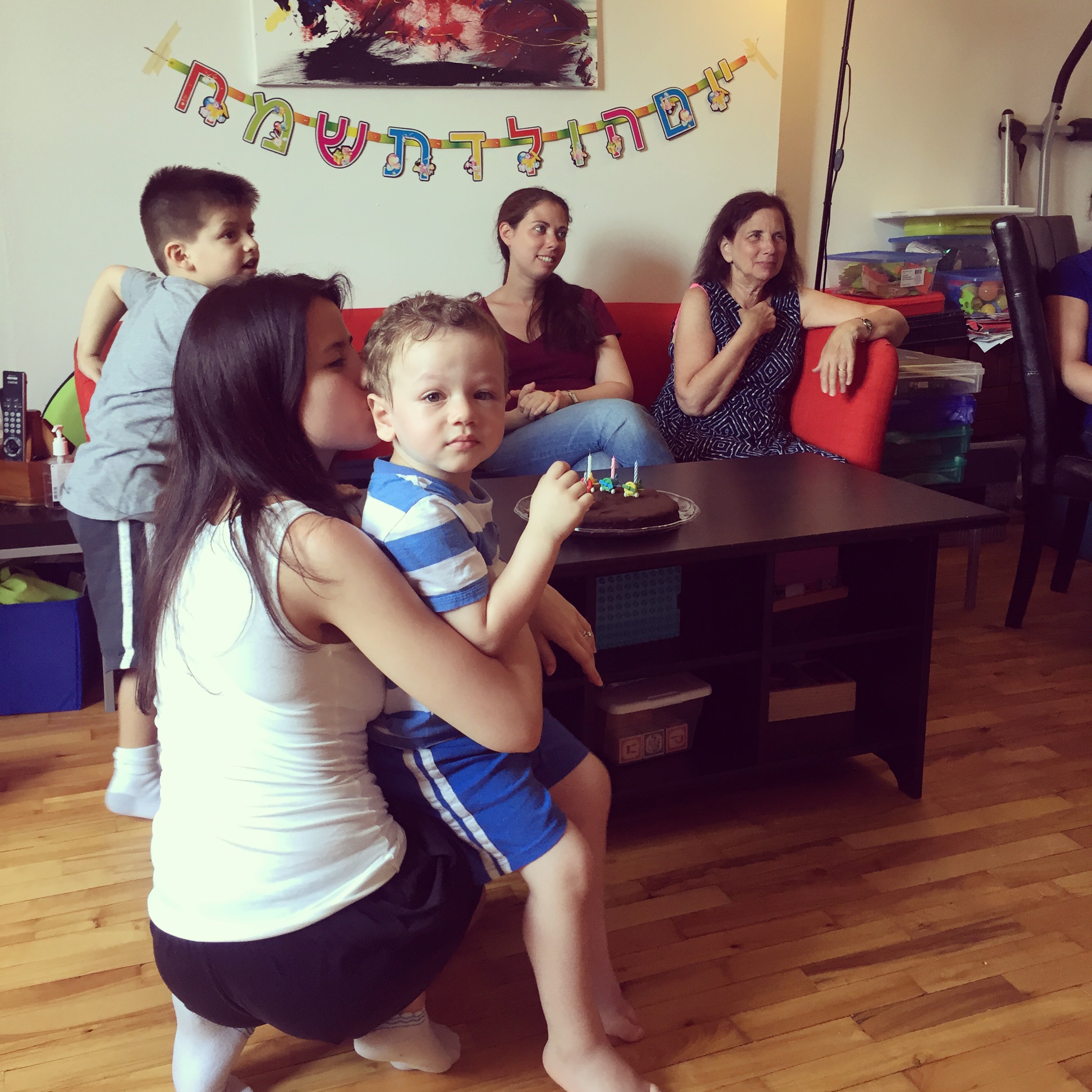
This weekend we were able to celebrate with family and friends in Central Park and give Idan a relatively normal birthday party for a three year old. Idan is of course not a normal three year old. No, he is the size and weight of a 4 year old with the wit and sense of humor of much older kid. He speaks in full sentences and wants to know why and how everything works. He might still be behind with outdoor playing skills but he can name more shapes than I can, and build a pretty impressive magna tiles castle. He knows that he had a transplant in Seattle, and when watching clips of our time there, he asks to go back, but this time “as a kid.” We tell him we will, but he of course cannot know everything that that really means yet. Until that day comes, we will continues to count our blessings, and plan for the next adventure.
Idan's Blog
Three’s A Charm
by Amanda • • 1 Comment
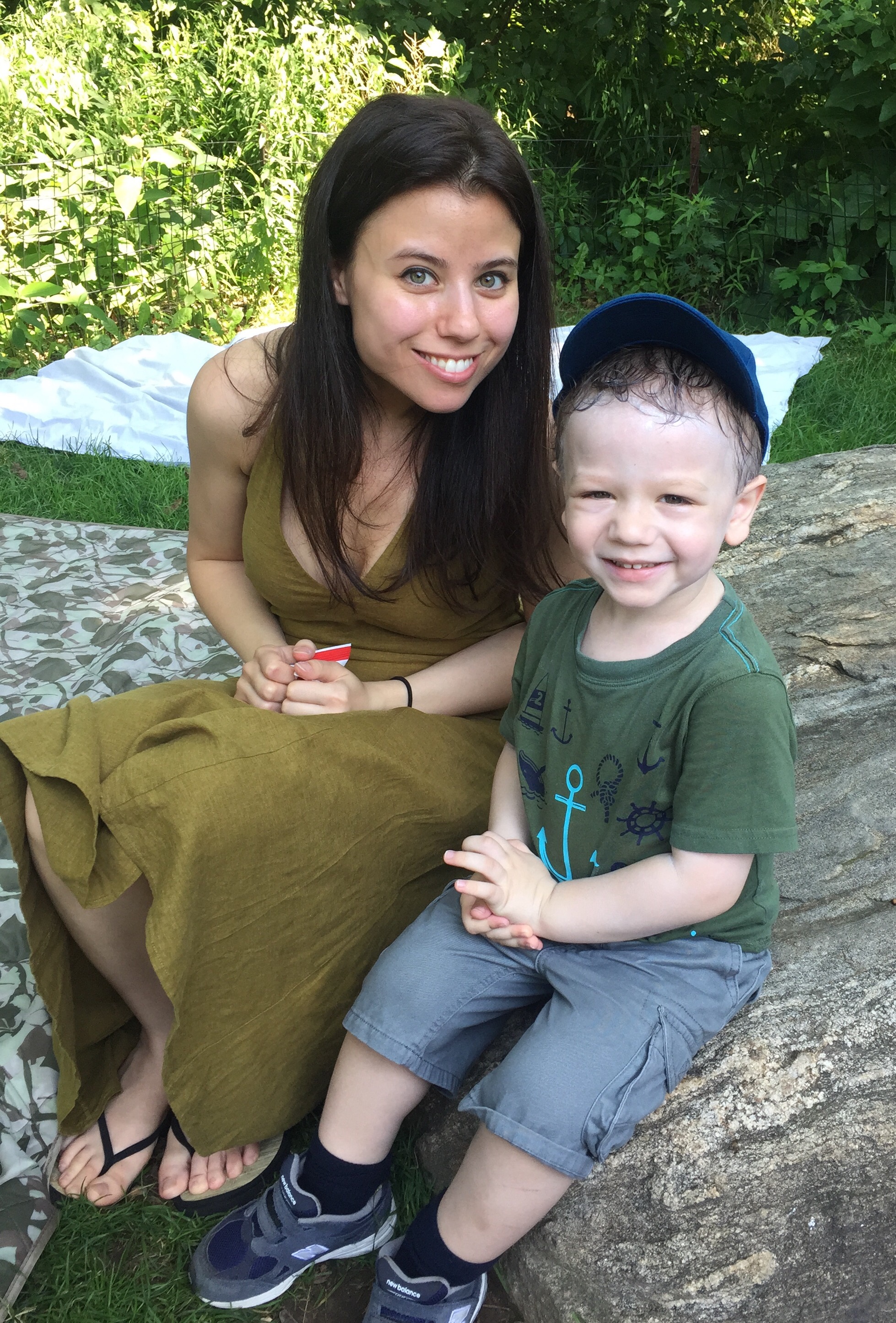
Three’s a Charm.
Something my mother always says – “good things happen in three’s.” Let’s hope that good things happen for three year olds too. Idan is turning three on Monday. It’s hard to believe only three years have passed since he came into our lives, and yet – as I believe it to be the case for most parents – the moment is seared into my memory like none other.
First, let me dispel you of the notion that you “forget” labor pains – you don’t. They’re real and they are relentless. But after spending nearly ten months carrying a precious life inside you, the pain is a small sacrifice to hold that bundle in your arms. I remember looking over at Akiva just a few seconds before Idan made his debut, and seeing his face slowly light up and his eyes widen as he saw Idan’s head. Within moments, my whale of a belly was deflated, and the weight was transferred into my arms. Eight pounds, five ounces. All of them, suddenly in my arms. His beautiful face, two eyes, ten fingers, ten toes, little chubby arms, and a tiny voice crying out, demanding to be heard. He felt heavier than I expected. Solid. Real.
I remember staring into his tiny face, watching his eyes open and close, feeling tiny breaths on my shoulder. He was small, but powerful. Within 48 hours of being born, he was already playful. Akiva and I fell deeply in love. There is nothing quite like the love you have for your child.
Idan is not your average three year old. He’s had more “life experiences” than most people have in a lifetime. He’s known pain and fear intimately. Yet he’s resilient. He’s fearless, and he’s funny. He’s cute and silly and playful and loving and thoughtful and inquisitive.
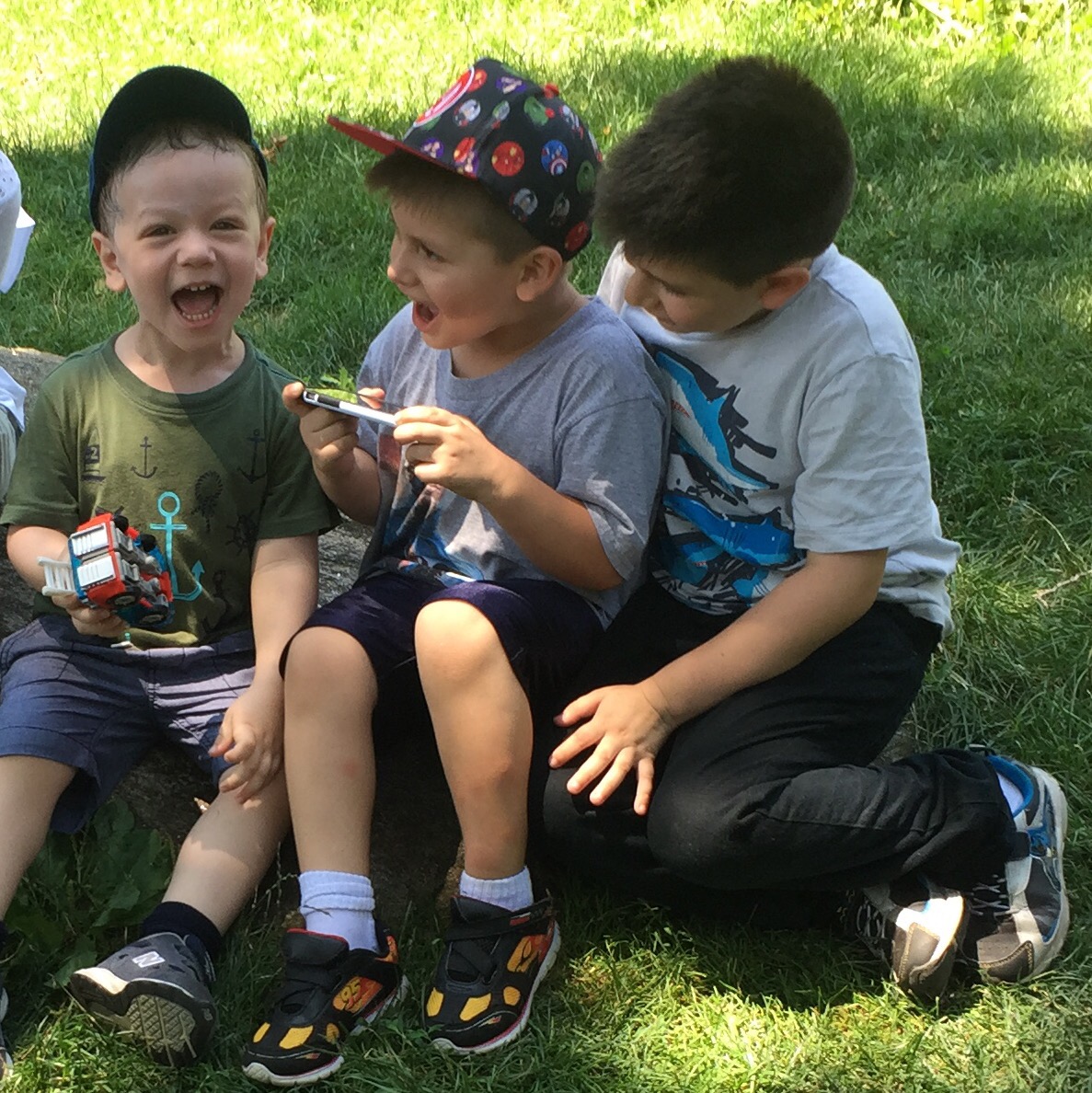 This year is a big year, again. This year, Idan will likely once again be asked to trust us, to allow us to lead the way. He’s no longer a baby, but he’s still the same child that was thrust into my arms three years ago. Solid. Real.
Happy Birthday Idani. Just like the labor pains, we won’t be able to forget the painful memories, but we are mindful of the important role they have played in shaping you into the incredible child you are today. You – three-year old beautiful special you – have arrived, and, with your tiny voice crying out (well, mostly singing these days), you still demand to be heard.